KS4 DESIGN TECHNOLOGY
We offer 2 courses at KS4 in the Design Technology Department: TECH Construction and the Built Environment as well as the GCSE Product Design Course.Tech Award L1/2 in Construction and the Built Environment
Course Overview
The Pearson BTEC Tech Award in Construction and the Built Environment is a vocational qualification designed for students in Key Stage 4 who are interested in how buildings are designed, constructed and maintained. The course combines practical learning with technical knowledge, helping students develop skills that are valued within one of the UK's largest industries.
Students gain an understanding of construction technologies, building design, materials, sustainability, health and safety, and practical construction skills. The qualification is equivalent in size to a GCSE and provides an excellent foundation for further study, apprenticeships and careers within the construction sector.
What Will Students Learn?
There are 3 Components for the course:
Component 1: Construction Technology- Theory- Written Exam
Students learn about:
- Types of buildings and construction methods
- Modern methods of construction and sustainability
- Building foundations, walls, roofs and structural elements
- Health, safety and site management
- Construction materials and their uses
This is assessed through an external written examination, which takes place in Spring term of Y11.
Component 2: Construction in Practice - This is completed in Year 10
Students develop practical skills through:
- Measuring, marking out and setting out
- Safe use of hand tools and equipment
- Working with construction materials
- Producing a practical construction outcome
- Quality control and accuracy in construction work
Students typically specialise in practical skills linked to areas such as carpentry and joinery or brickwork.
Component 3: Construction and Design – This is Completed in Y11
Students:
- Respond to client design briefs
- Create and communicate design ideas
- Produce sketches and design proposals
- Consider construction constraints and sustainability
- Develop problem-solving and project-planning skills
This component encourages creativity while applying real-world construction principles.
How Is the Course Assessed?
|
Component |
Assessment Type |
Weighting |
|
Construction Technology |
External examination |
40% |
|
Construction in Practice |
Internal assessment |
30% |
|
Construction and Design |
Internal assessment |
30% |
Assessment is designed to reflect real industry practices, combining knowledge, practical skills and project-based learning.
Future Opportunities
The qualification supports progression to:
- Level 2 and Level 3 Construction courses
- BTEC Nationals
- T Levels
- Apprenticeships
- Careers in trades, site management, surveying, architecture, engineering and the wider built environment sector
Students gain an excellent insight into the diverse career opportunities available within the construction industry.
AQA GCSE Product Design:
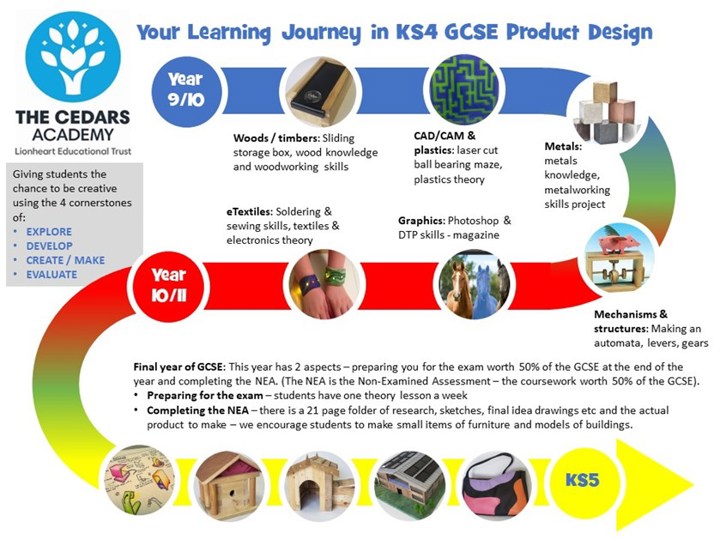
At Cedars we also run the GCSE Product Design Course. This course blends creative practical work with core technical theory, split evenly into a 50% written exam and a 50% non-exam assessment (NEA) coursework project. Students learn about smart materials, manufacturing processes, and environmental design factors while building hands-on skills across timbers, polymers, metals, and electronics.
Course Details
- Written Examination (50%): A 2-hour final paper testing core technical principles, specialist material knowledge, and designing and making principles.
- Coursework / NEA (50%): A substantial 30-to-35-hour practical design-and-make project based on an annual contextual challenge released by AQA in June of Year 10, where students create a working prototype and an evidence portfolio.
- Key Skills: Problem-solving, iterative designing (modelling, testing, and evaluating), computer-aided design (CAD), and safe workshop manufacturing.
In Year 10
Students begin the AQA GCSE course by developing the knowledge, understanding, and practical skills required for success in both the written examination and the Non-Exam Assessment (NEA).
Through a series of focused design-and-make projects, students build skills in:
- Design communication and technical drawing.
- Research and investigation techniques.
- Computer-Aided Design (CAD).
- Model making and prototyping.
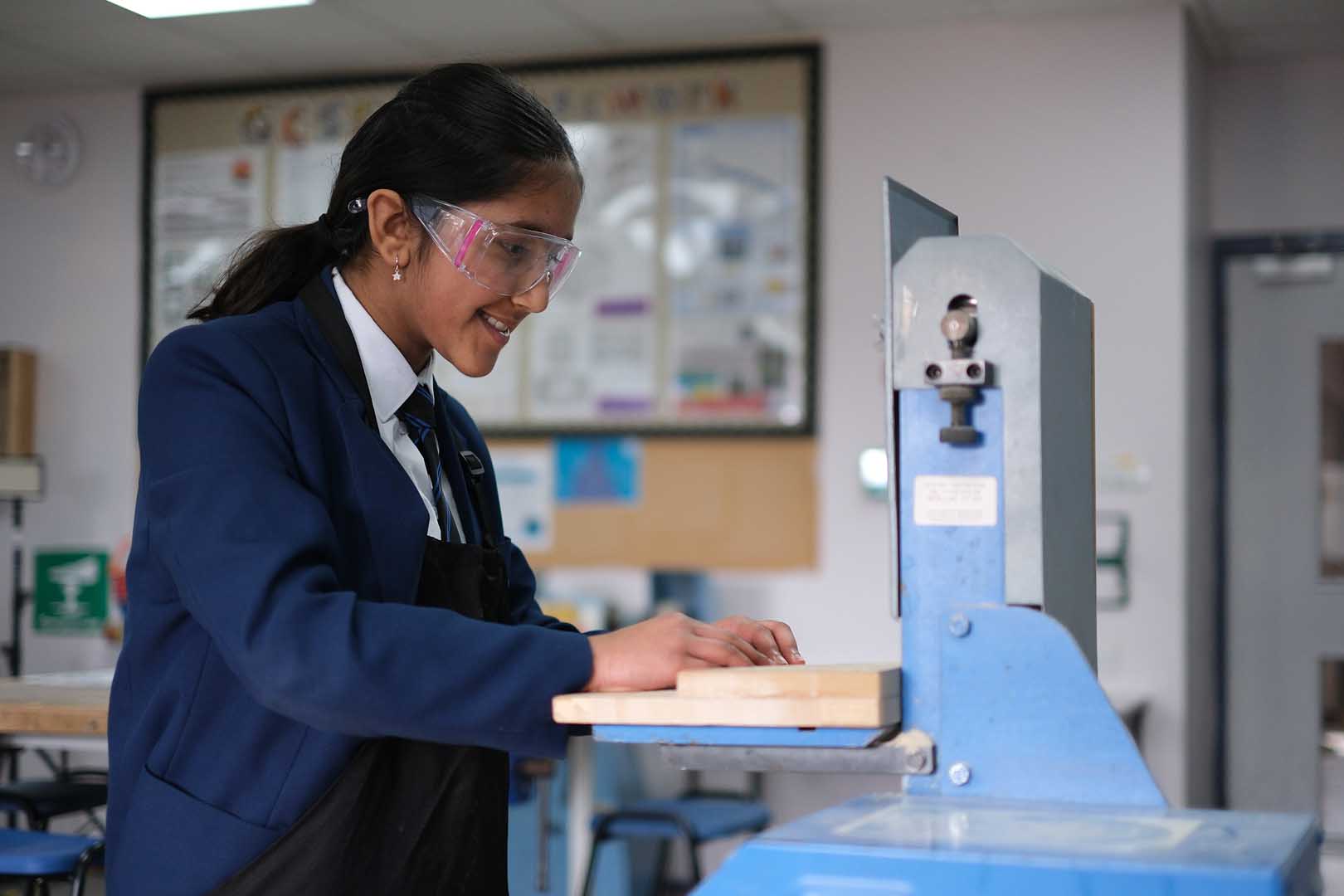
- Manufacturing and practical workshop skills.
- Product analysis and evaluation.
A typical major project may involve the design and manufacture of a Bluetooth speaker, allowing students to integrate electronic components with product design principles.
Students receive four Design and Technology lessons per week, including:
- A double practical lesson in the workshop.
- A theory lesson focused on examination preparation.
- A design lesson developing drawing, modelling, and NEA-related skills.
In Year 11
Students complete their GCSE Non-Exam Assessment (NEA), which requires them to investigate, design, manufacture, and evaluate a product in response to a contextual challenge set annually by AQA.
Students will:
- Carry out in-depth research and analysis.
- Develop and refine design ideas.
- Produce detailed design work and prototypes.
- Manufacture a high-quality final product.
- Evaluate their work against the needs of the client and the design specification.
Once the NEA has been completed, lessons focus on revision and examination preparation, ensuring students are confident across all areas of the specification before sitting the final GCSE examination.
Beyond the Classroom
Design and Technology helps students develop valuable transferable skills, including:
- Creativity and innovation.
- Problem solving.
- Project management.
- Communication and presentation skills.
- Practical making and manufacturing techniques.
- Critical thinking and evaluation.
These skills support progression into A Level study, apprenticeships, engineering, product design, architecture, construction, and a wide range of creative and technical careers.